The Jews of Babylon
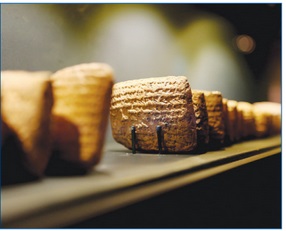 Jerusalem exhibit documents exilic community after the First Temple
Those of us fascinated by the ability of archaeology to bring to life ancient Jewish history and to remind of us of our historical continuity are now presented, for the first time, with direct evidence of the Jewish community established in Babylonia right before and after the destruction of the First Temple. While these finds were partly known to scholars for some years now, the first public presentation of these documents took place on Feb. 1 with the opening at the Bible Lands Museum in Jerusalem of a full-scale exhibit and a scholarly conference devoted to these important texts.
Click here to read the rest of the article in the Jewish Tribune.
New Order in the Neighborhood
Collapse of Iraq has changed Israel’s position on the Middle East chessboard
 While the ongoing rocket fire from Gaza and the Israeli military operation intending to stop it and to protect the citizens of Israel are apparently moving toward a denouement, it is important to remember that this struggle is part of a wider process of geopolitical change going on in the Middle East. Israelis often say that “we live in a dangerous neighborhood,” but what they perhaps need to add, at least now, is that they live in a neighborhood in which a tremendous amount is changing.
Read the rest of this article from the Long Island Jewish World.
Review of The Dead Sea Scrolls and Contemporary Culture
 Ariel Feldman
Brite Divinity School, Texas Christian University
Dead Sea Discoveries 21 (2014) 82–129
Adolfo D. Roitman, Lawrence H. Schiffman and Shani Tzoref (eds.)
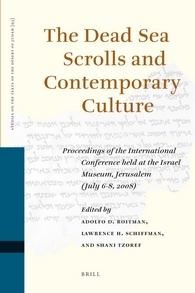
The Dead Sea Scrolls and Contemporary Culture: Proceedings of the International Conference Held at the Israel Museum, Jerusalem (July 6–8, 2008). STDJ 93. Leiden: Brill, 2011. Hardcover. Pp. xviii + 769. € 202.00/US$ 287.00. ISBN 978-90-04-18593-7.
These proceedings of a 2008 Jerusalem conference contain 34 essays divided into five rubrics. The volume opens with “Some Thoughts at the Close of the Discoveries in the Judaean Desert Publication Project” by E. Tov. The next four essays deal with the “Identity and History of the Community.” F. García Martínez revisits “The Groningen Hypothesis,” affirming its assumption that the sectarian scrolls reflect different stages in the development of the community.
In her “1QS 6:2c–4a—Satellites or Precursors of the Yaḥad?” C. Hempel suggests that 1QS 6:2c–4a portrays the basic unit of the movement. E. Regev in “What Kind of Sect Was the Yaḥad?” analyzes the parallels between the Yaḥad and some modern sects. J.C. VanderKam, writing on “The Pre-History of the Qumran Community with a Reassessment of CD 1:5–11,” studies the references to 390 and 20 years in the… Continue reading